


PRAIA DA CONSOLAÇÃO (NORTE)
Consolação north beach
AQUI VIVERAM DINOSSAUROS À BEIRA-MAR
DINOSAURS LIVED HERE BY THE SEA
GEOLOGIA
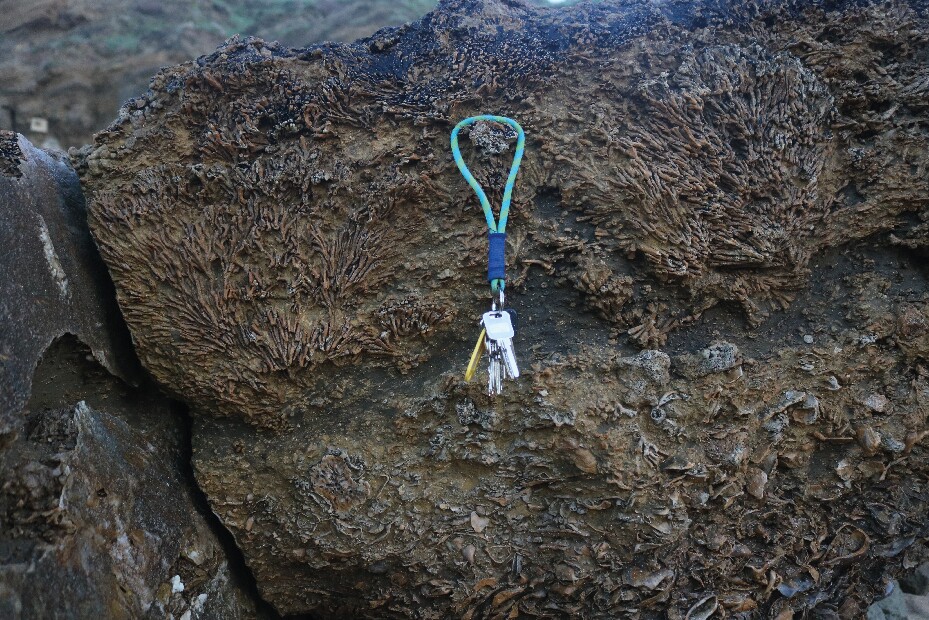
O Forte de N.ª Sr.ª da Consolação foi construído sobre rochas com 155 milhões de anos (Jurássico Superior). A norte, podemos ver camadas de calcário inclinadas, com muitos fósseis de conchas, corais e ouriços-do-mar (Fig. 1). Estes fósseis são testemunhos de que aqui existiu um mar tropical, com águas quentes e límpidas, como as atuais Caraíbas.
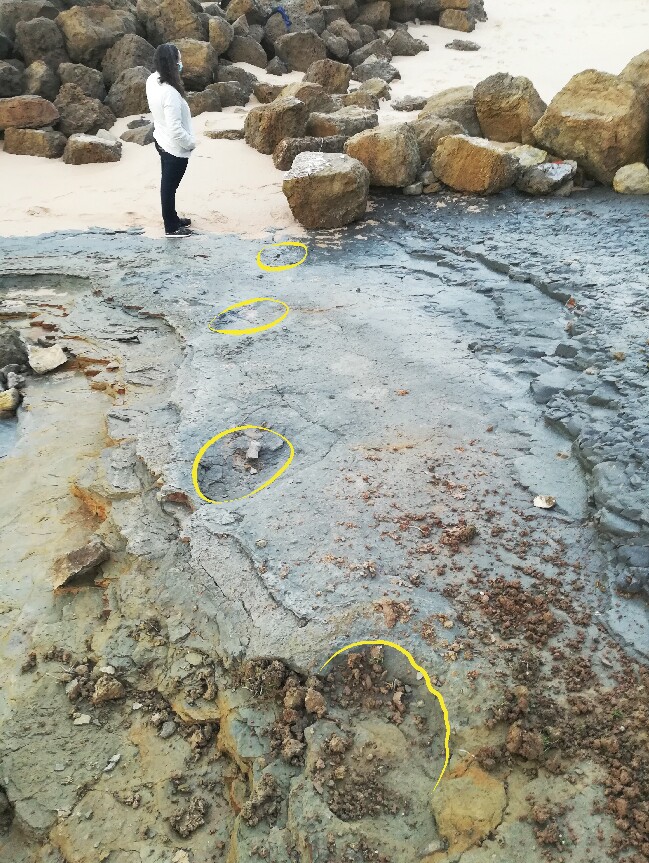
Nas camadas argilosas acinzentadas, podemos observar pequenas depressões alinhadas, quase circulares. Estas marcas são pegadas deixadas por dinossauros, em áreas lamacentas (Fig. 2), num ambiente parecido ao que hoje vemos na Ria Formosa (Algarve).
GEOLOGYThe N.ª Sr.ª da Consolação Fort was built on rocks with 155 million years old (Upper Jurassic). To the north, we can see deepening limestone layers with many fossilized shells, corals, and sea urchins (Fig. 1). These fossils are testimony that a tropical sea existed here, with warm and clear waters, like the present-day Caribbean.In grayish clay layers, we can see small depressions, aligned and almost circular. These marks are footprints left by dinosaurs in muddy areas (Fig. 2), in an environment similar to what we see today in the Ria Formosa (Algarve).-
-
Fig.1
Camadas rochosas, com vários fósseis de conchas e corais
Layers of rocks, with several bivalve shells and corals
- Fig. 2
Representação das pegadas de dinossauro
Representation of dinosaur footprints
BIOLOGIA
Na faixa imediatamente a norte, encontramos dois ambientes litorais, o rochoso e o arenoso, com organismos também diferentes. O ambiente rochoso tem várias saliências que servem de proteção a animais como o burrié (Steromphala umbilicalis, Fig. 3) e o caranguejo-mármore (Pachygrapsus marmoratus). Já na zona arenosa, grandes quantidades de conchas e organismos são trazidos pelas ondas. De entre as várias conchas, procure os beijinhos (Trivia monacha, Fig. 4).
BIOLOGYIn strip immediately to the north, two coastal environments are present, one rocky and one sandy, with also different organisms. The rocky environment has several cavities that protect animals such as the flat top shell (Steromphala umbilicalis, Fig. 3) and the marble crab (Pachygrapsus marmoratus). In the sandy area, large quantities of shells and organisms are brought in by the waves. Among the various shells, look for the european cowrie (Trivia monacha, Fig. 4).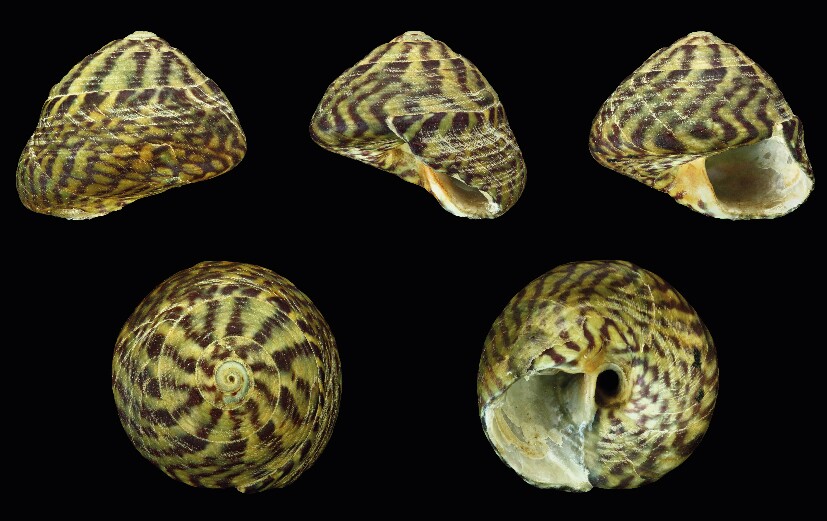 Fig. 3 - Burrié, fotografia de H. Zell / Flat top shell, photograph of H. Zell
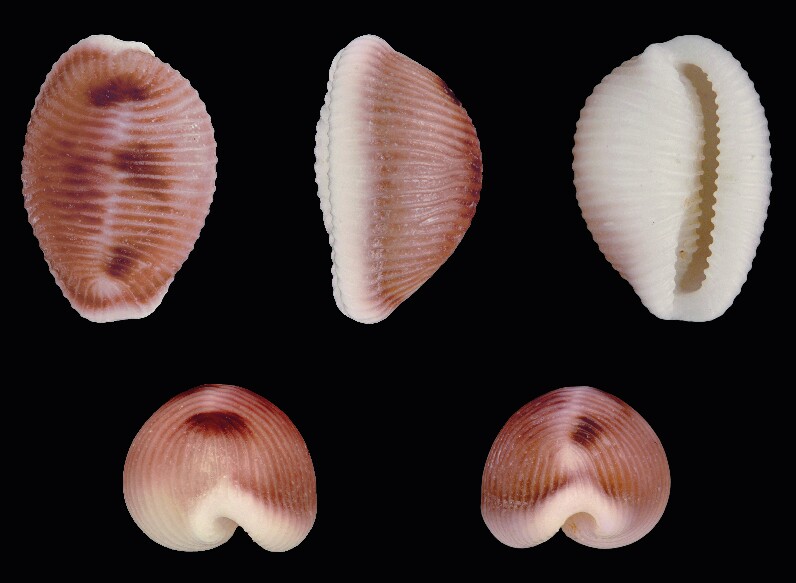 Fig.4 - Beijinhos, fotografia de H. Zell / European cowrie, photograph of H. Zell
CULTURE
A 26 de maio de 1589 desembarcaram, na baía da Consolação, 6500 soldados ingleses (Fig. 5). Dirigidos pelo general John Norris, vieram ajudar D. António, Prior do Crato, no cerco a Lisboa. O seu objetivo era depor Filipe II de Espanha do trono de Portugal e restaurar a soberania nacional.
A expedição regressou à base sem alcançar os seus objetivos. A violência praticada pelas tropas inglesas na marcha em direção à capital pode ter levado ao aparecimento da expressão "Amigos de Peniche".
CULTUREOn 26th May 1589, 6500 English soldiers disembarked at the Consolação Bay (Fig. 5). Led by General John Norris, they came to aid D. António Prior do Crato, in the siege of Lisbon. Their objective was to expel Filipe II of Spain from the throne of Portugal and restore the national sovereignty.The expedition returned to base without achieving this objective. The expression “Friends of Peniche” might relate to the violence practiced by the English troops on the march to the capital.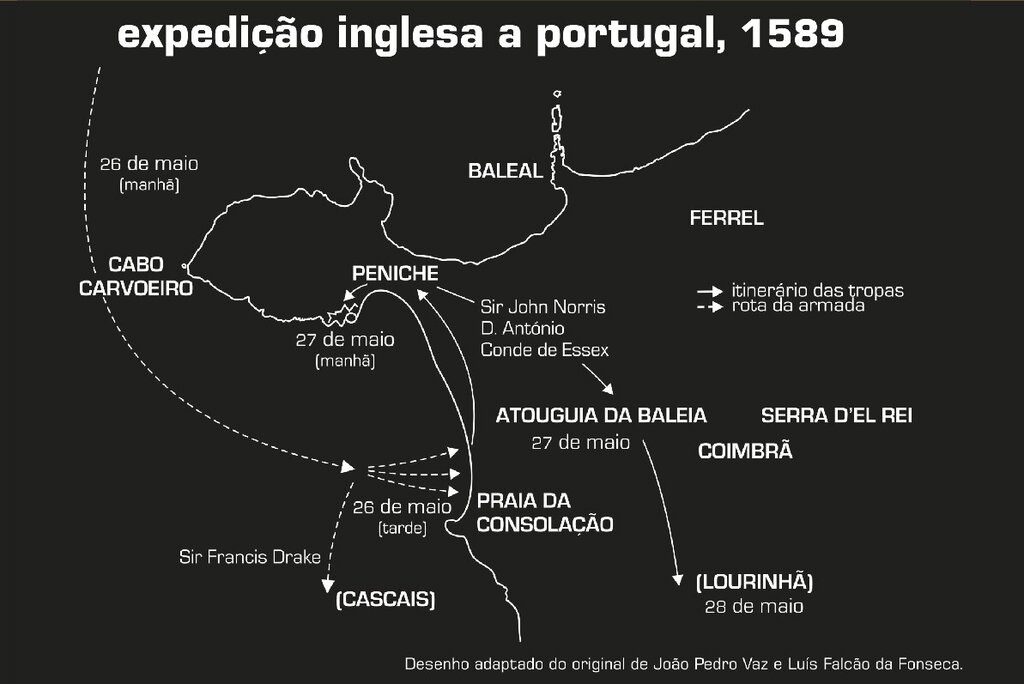
- Fig. 5
Expedição Inglesa a Portugal, 1589
The English Expedition to Portugal, 1589